Yokaï Realm
In the Shinto indigenous religion of Japan, there is a bestiary of spirits that evolved across ages through local folkloric tales.
Intention statement
Yokaï Realm is about the transformation of folklore into tangible experiences of life. Through functional pieces, I presents a body of work that are made to incarnate spirits when you use them.
These are interactive pieces that create rituals in the daily life to transmute ourself.
-
Yokaï Realm is rooted in an animistic vision of the world, the belief that spirit can inhabit all things, whether living beings, natural elements, or crafted objects. This perspective has accompanied me through different moments of my life and continues to influence the way I create.
Japanese folklore offered a rich framework through which to explore this relationship between matter and spirit. Rather than depicting mythical beings directly, the collection seeks to translate their presence into forms that can be experienced physically. Each piece becomes a meeting point between mythology and everyday life, inviting a renewed sense of wonder toward the objects that surround us.
-
Within Yokaï Realm, materials and forms are never purely aesthetic choices. Every shape, proportion, and surface is conceived as a symbolic element that supports the spirit embodied by the work.
Sometimes this connection is expressed through form itself; at other times it emerges through metaphor. White oak, rye straw marquetry, and handcrafted details are used not only for their visual qualities but also for their capacity to convey strength, protection, transformation, or resilience. Through craftsmanship, abstract qualities are translated into tangible forms, creating objects that act as vessels for meaning.
-
Each work within Yokaï Realm draws inspiration from a specific yokaï and the values it represents.
The Tengu embodies rigor, discipline, and protection. Traditionally associated with mountains and forests, it is regarded as both a guardian and a teacher. In the collection, its presence evokes strength, responsibility, and the protection of those who inhabit a shared space.
The Kitsune, one of the most celebrated spirits of Japanese folklore, is known as a shapeshifter whose nature oscillates between wisdom, mischief, and transformation. Here, I focus on the ancient stories of love between a Kitsune and a human, exploring themes of devotion, change, and the ability to move between worlds.
The Chōchin Obake originates from the belief that an everyday lantern, after a century of existence, may become inhabited by a spirit. This story resonates deeply with my desire to create objects that possess a lasting presence, a strong shell for a strong soul. It reflects the idea that through time, care, and use, an object can become more than a tool and acquire its own identity.
-
These objects are created to be used. Their purpose is not fulfilled through observation alone but through interaction.
Like the spirits that inspire them, they become fully present when activated by human gestures. Opening, touching, sitting, storing, or gathering around them transforms ordinary actions into small rituals. Through these daily interactions, the objects come alive and invite their users to embody the values carried by each spirit.
In this way, Yokaï Realm is not simply a collection of furniture and sculptures, but a collection of companions designed to inhabit everyday life and encourage a more conscious relationship with the objects we live alongside.
TENGÜ
TenGü translates the spirit of the Tengu into a functional sculpture of discipline, observation, and transformation.
-
TenGü is an homage to the Tengu, a figure from Japanese folklore associated with wisdom, martial discipline, and a deep connection to the natural world.
It reflects the idea of the Tengu as a vigilant presence: an observer, a guide, and a symbolic bridge between human discipline and the forces of nature.
-
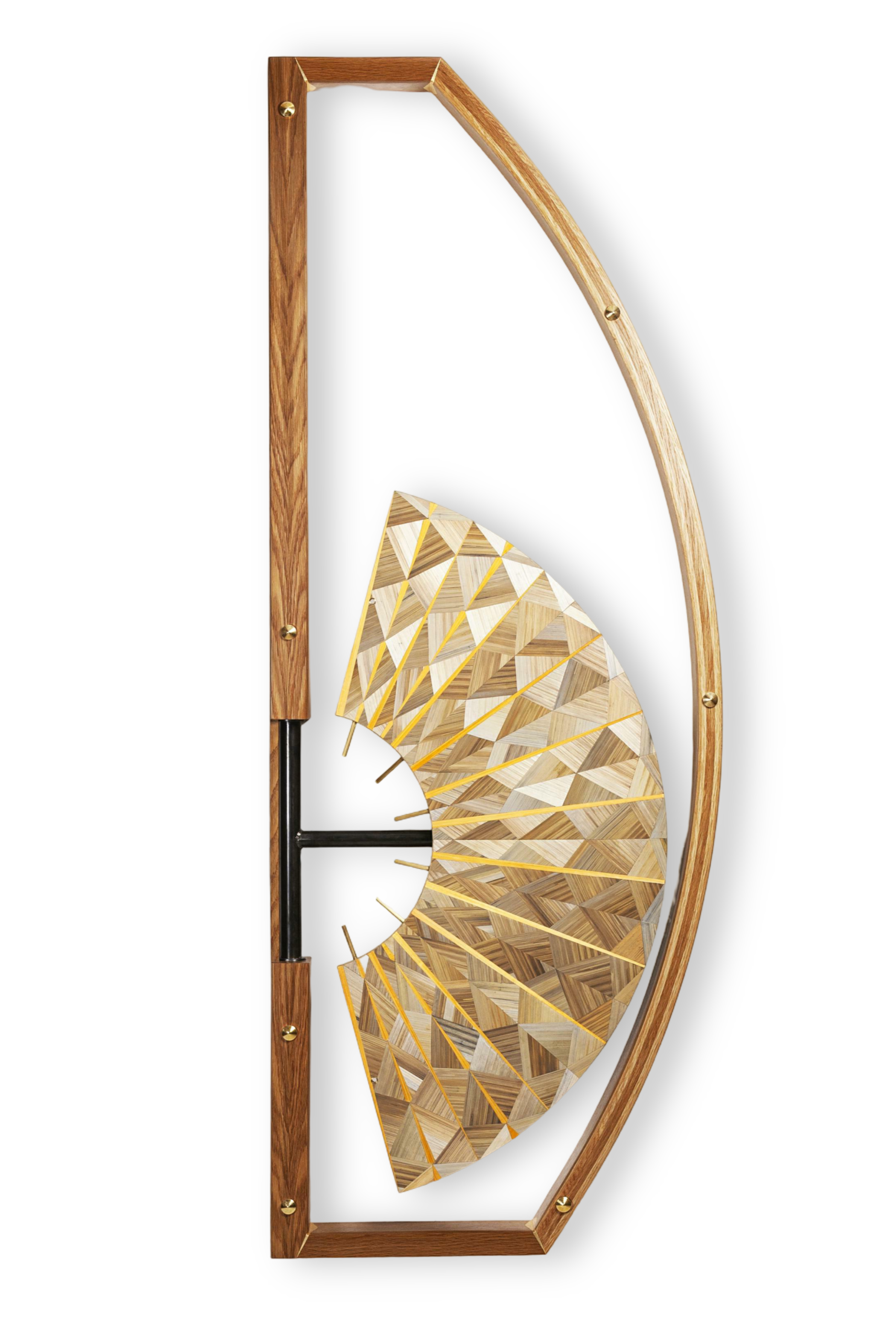
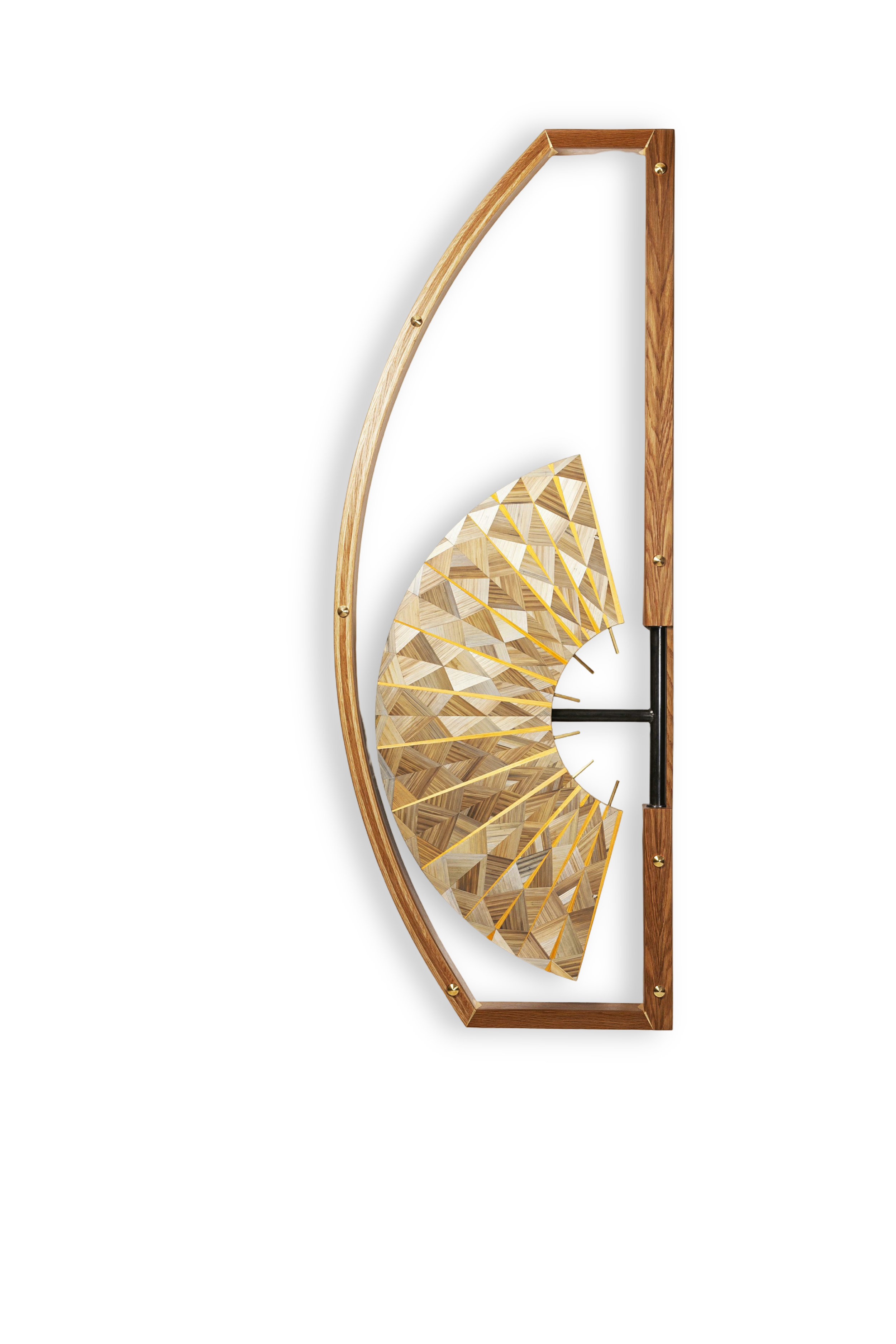
The design draws directly from key elements of the Tengu mythos. The fan becomes a central motif, symbolizing authority, breath, and invisible force. Its feather-like patterns, rendered in straw marquetry, evoke wings and movement, while referencing the creature’s iconic attributes.
Crafted in white oak with accents of brass and gold leaf, TenGü balances strength and refinement. Every material reinforces its dual nature: grounded in structure, yet carrying a sense of elevation and lightness.
-
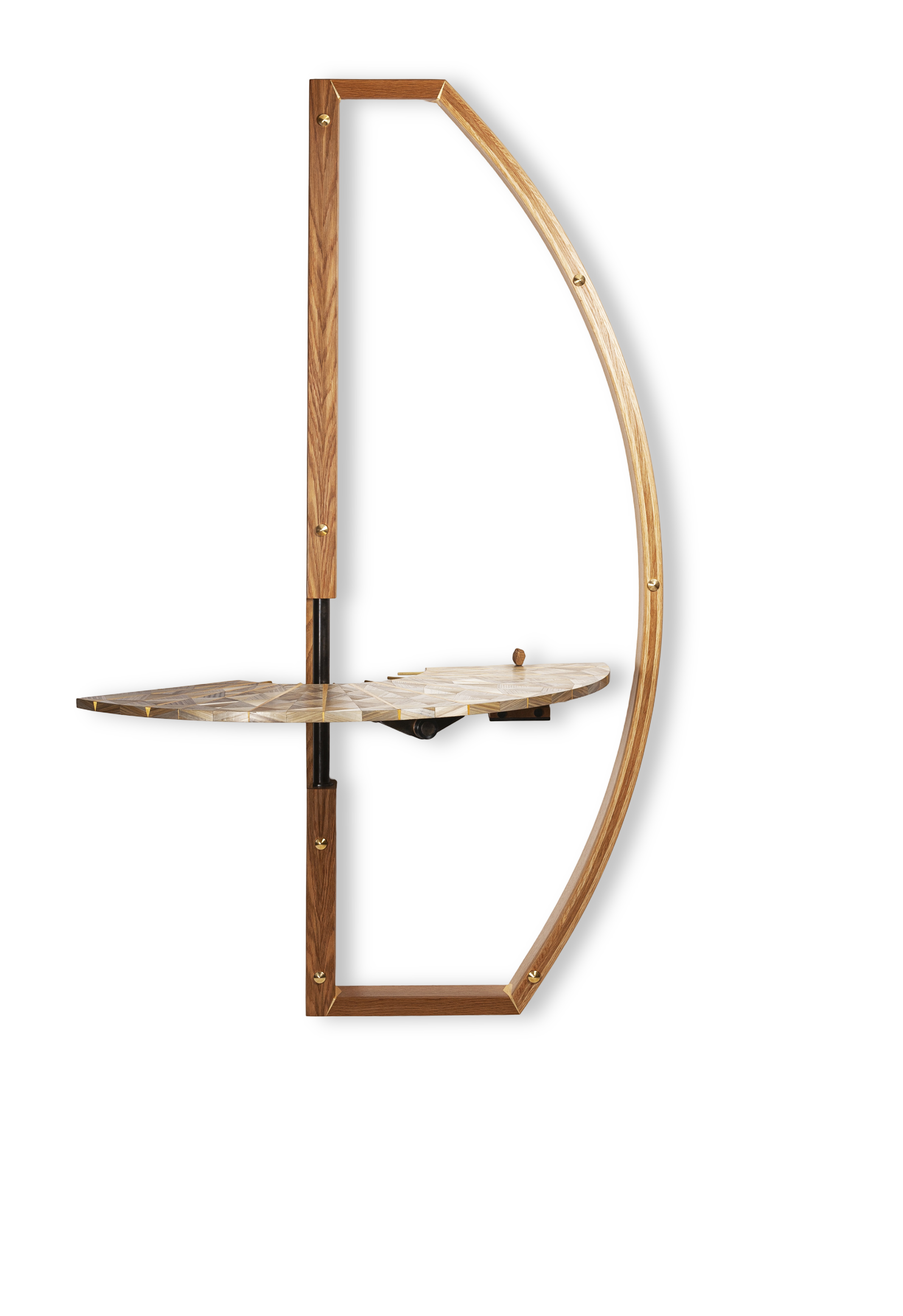
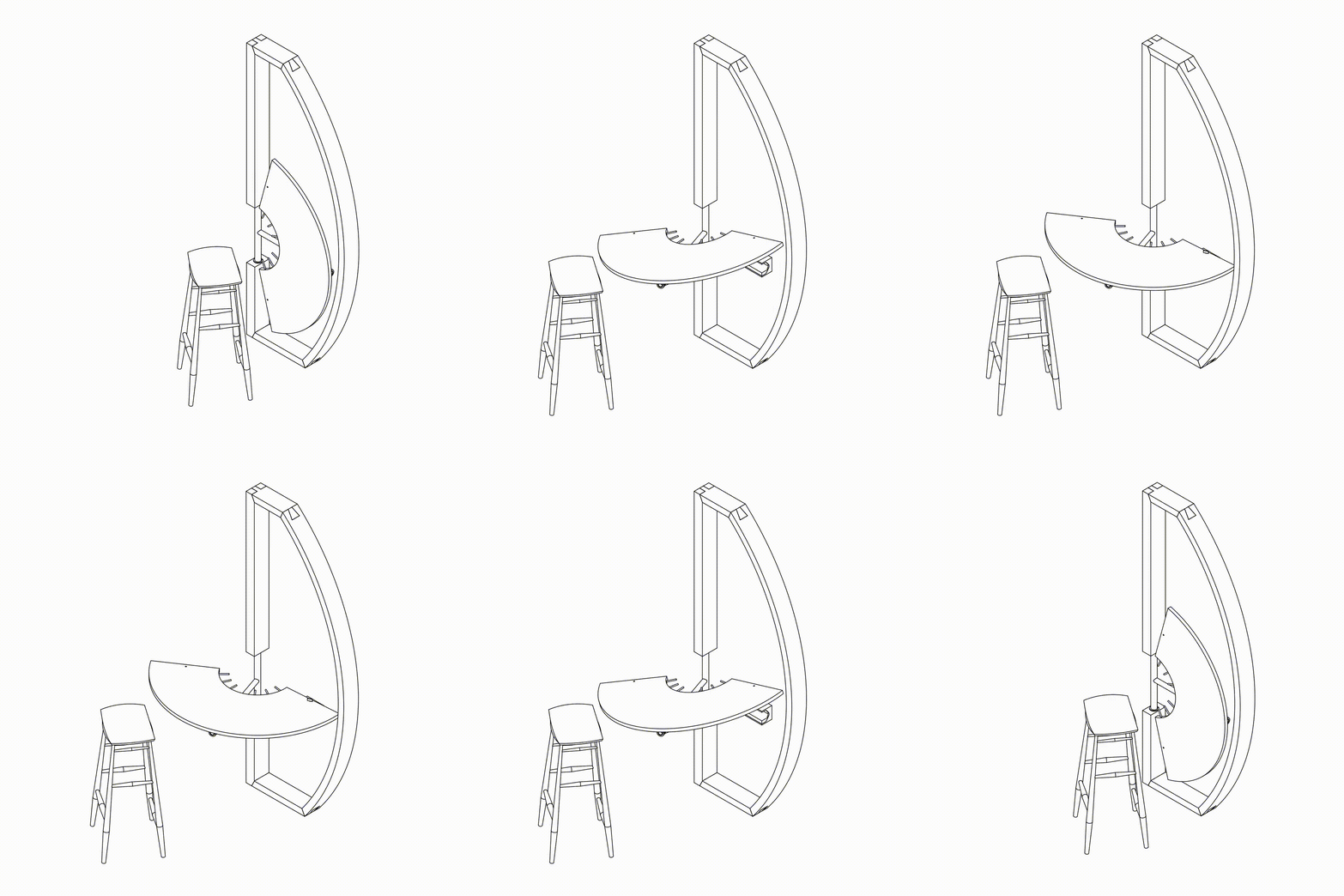
TenGü is activated through use. Its transformation mechanism invites the user to rotate the fan from vertical to horizontal, echoing the gesture of a martial artist entering a state of focus and readiness.
This movement creates a moment of pause and awareness, turning a simple interaction into a ritual.
Through this activation, the piece shifts from object to presence, becoming a functional sculpture that embodies discipline, awareness, and transformation.
-
-Size : 180×68×10 cm
-Materials : Oak wood , Rye straw, Steel, gold leaf
KITSÜ
KitSü embodies the Kitsune as a space of transformation; where love, duality, and connection coexist within a living structure.
-
KitSü is a piece of art furniture inspired by the Kitsune, the fox spirit of Japanese folklore known for transformation and its ability to move between worlds. The work is rooted in an ancestral love story between Ono and a fox spirit: a narrative of devotion, distance, and coexistence between two seemingly separate realms.
Through this interpretation, KitSü becomes a reflection on boundaries: between separation and unity, solitude and connection.
-
Shaped like an egg, KitSü evokes the idea of a cocoon: a space within a space. Its structure balances openness and intimacy through three curved wooden panels anchored to a hexagonal white oak pillar.
One panel, inlaid with circular mirrors and blue and black straw marquetry, symbolizes the Kitsune fire and its ethereal, shifting presence. The mirrored surface can be repositioned, introducing variability and interaction, echoing the spirit’s transformative nature.
The fan-shaped desk in white oak, brass leaf, and straw marquetry acts as the functional core of the piece, while the open panels maintain a visual dialogue with the surrounding environment.
-
KitSü is designed as an adaptable environment. Its components invite the user to adjust, reposition, and engage with the structure, creating a personal spatial experience.
This interaction echoes the Kitsune’s ability to shift form and identity. The piece becomes a living framework for reflection, connection, and solitude, allowing each user to define their own balance between independence and togetherness.
Through use, KitSü becomes more than furniture: it becomes a space of transformation shaped by human presence.
-
-Size : 163×163×170 cm
-Materials : Oak wood , Rye straw, Steel, gold leaf, Glass mirrors


OBÄKE
Obäke explores the moment an object begins to live: where time, movement, and memory transform matter into presence.
-
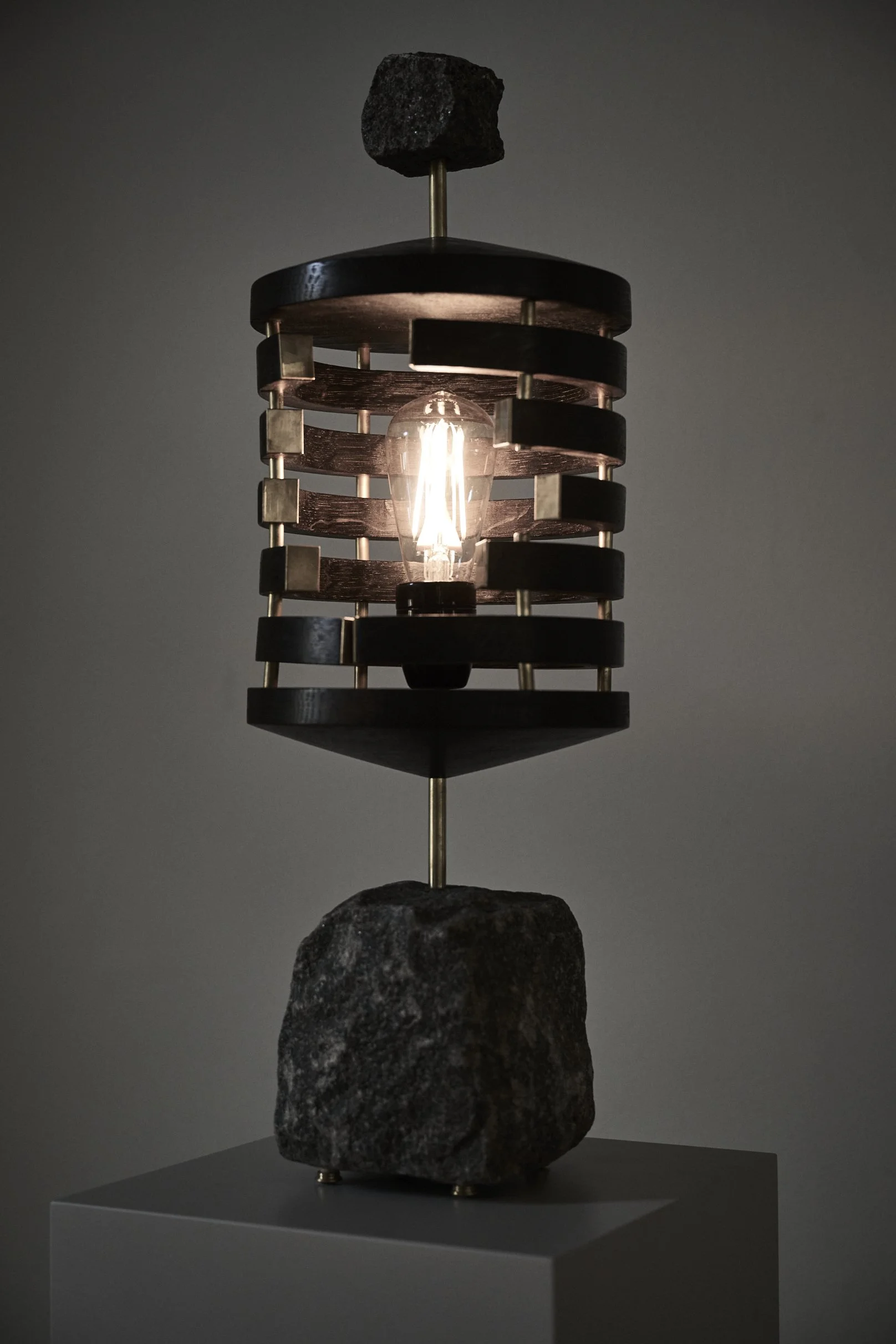
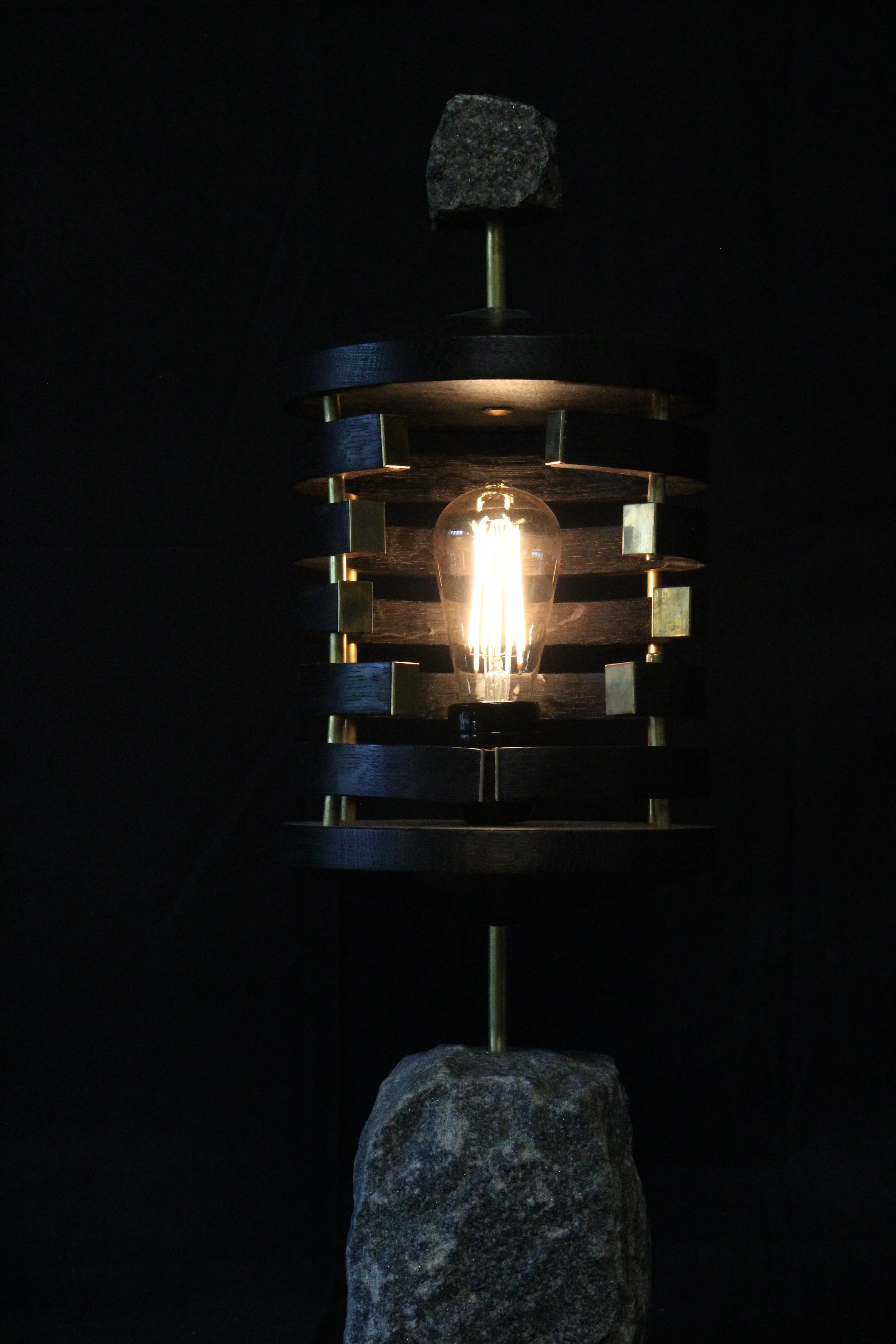
Obäke is inspired by the Chōchin-Obake, the ghost lantern of Japanese folklore. As a tsukumogami, it represents the belief that everyday objects can become inhabited by spirit after a century of existence.
Rooted in ukiyo-e imagery and kabuki theater, this yokaï embodies transformation, playfulness, and the hidden life within the ordinary. Obäke extends this idea into contemporary form, exploring how objects evolve through time and perception.
-
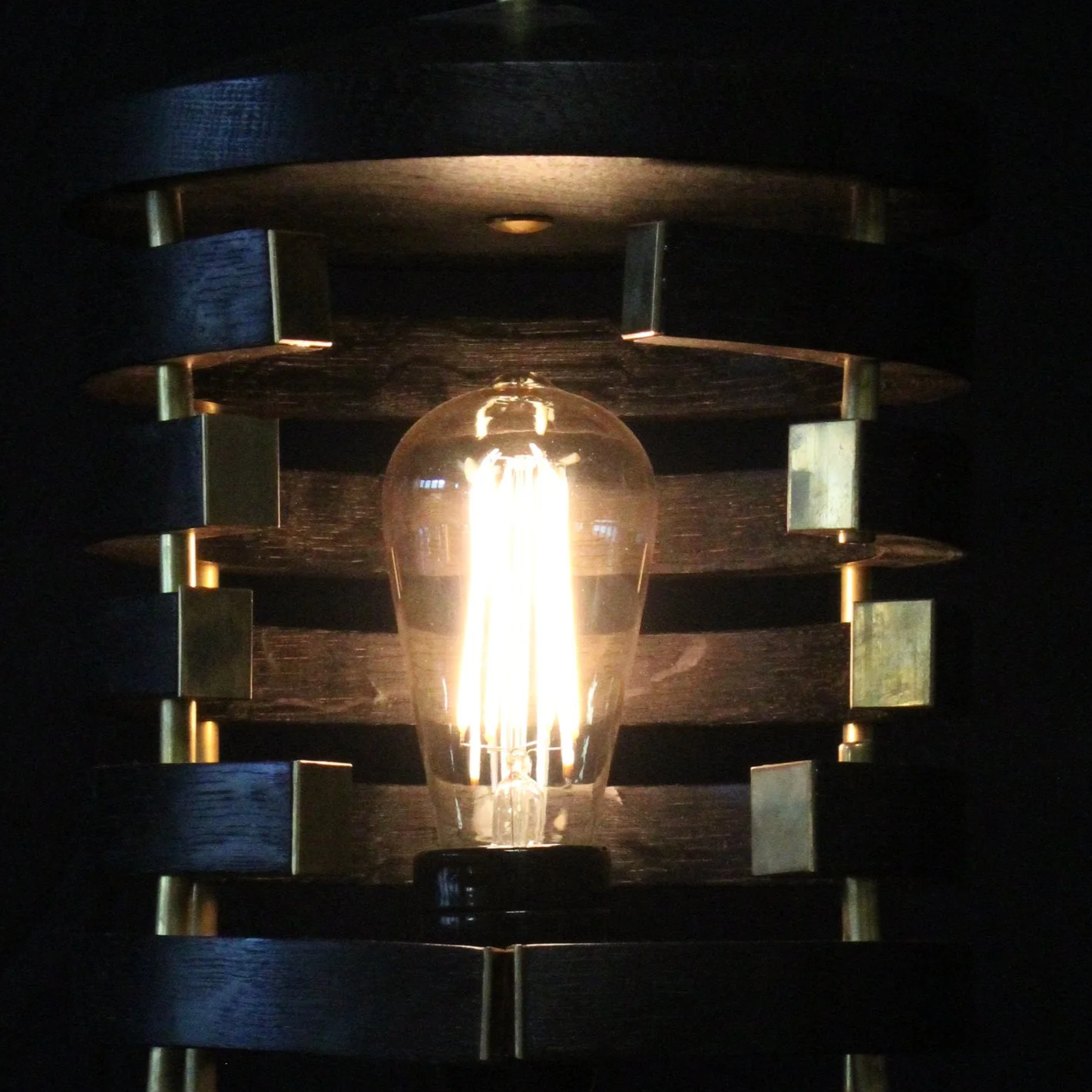
The design draws from traditional Japanese lanterns and their structural evolution over time. Its open rib framework, crafted in bent wood, expresses fragility, transparency, and transformation.
Subtle material responsiveness, shifts caused by humidity and environment, introduces a sense of quiet animation. This gentle movement reflects the living nature attributed to the Chōchin-Obake, where stability and instability coexist.
Obäke becomes a vessel for time itself, where material change becomes symbolic presence.
-
TenGü is activated through use. Its transformation mechanism invites the user to rotate the fan from vertical to horizontal, echoing the gesture of a martial artist entering a state of focus and readiness.
This movement creates a moment of pause and awareness, turning a simple interaction into a ritual.
Through this activation, the piece shifts from object to presence, becoming a functional sculpture that embodies discipline, awareness, and transformation.
-
-Size : 60×30×30 cm
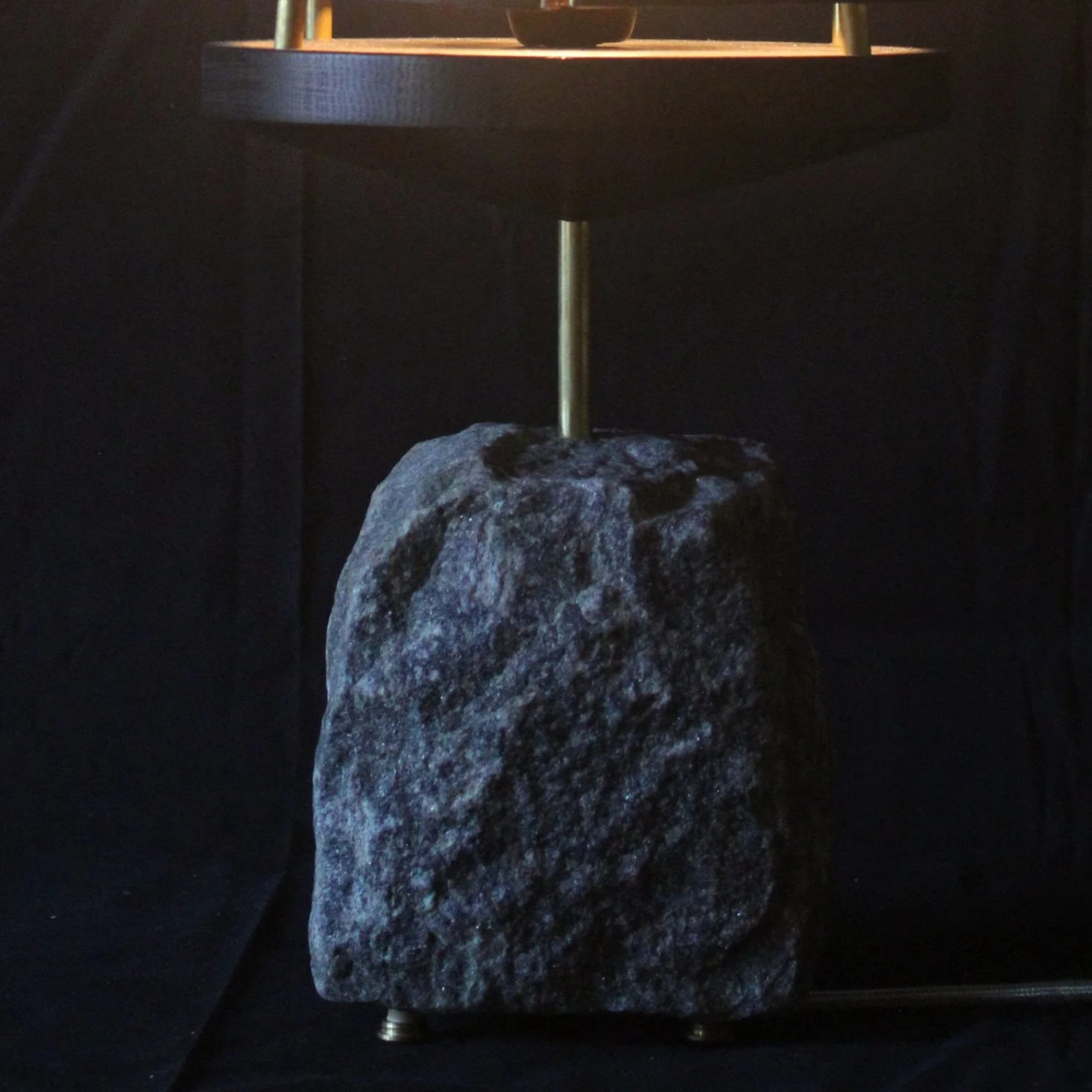
-Materials : Oak wood , Brass, Danish street Granit